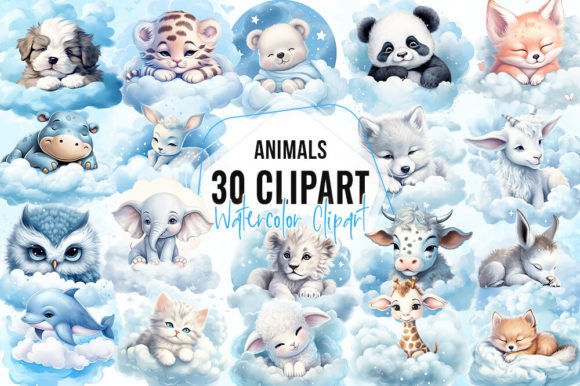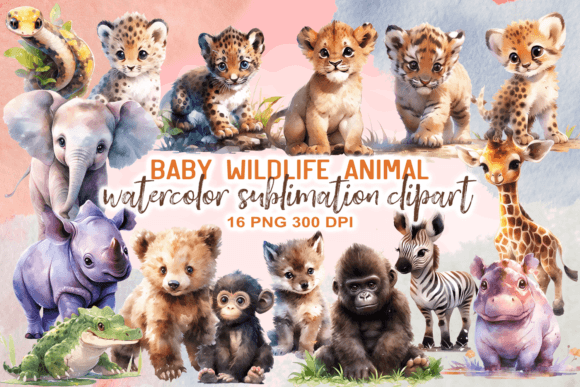
Watercolor Baby Wildlife Animal Clipart: Adorable Designs
When you need to infuse a project with innocence, warmth, and a touch of nature, nothing compares to the charm of hand-painted illustrations. However, commissioning custom art for every product launch or social media post isn't always realistic for entrepreneurs and designers. This is where high-quality Watercolor Baby Wildlife Animal Clipart becomes an indispensable part of your creative toolkit. It bridges the gap between authentic, artistic expression and the efficiency required in modern digital design and print-on-demand businesses.
The Visual Character of Watercolor Baby Wildlife Clipart
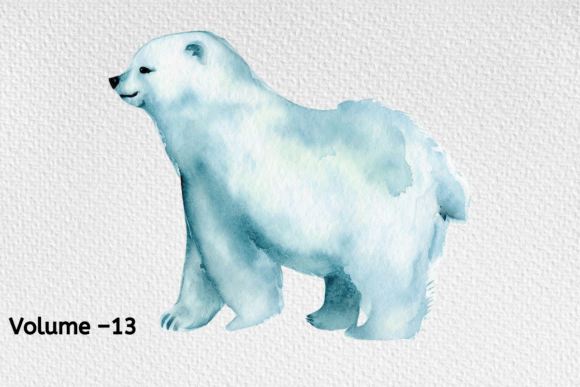
Visually, this collection offers a distinct softness that vector graphics often struggle to replicate. Watercolor artwork is characterized by its organic textures, gentle color bleeding, and translucent layers. When applied to baby wildlife animals—think fawns, foxes, bears, and bunnies—the result is a style that feels timeless and tactile. The aesthetic leans heavily into "cottagecore" and "whimsical" trends, but it retains a level of sophistication that prevents it from looking overly cartoonish. The soft edges and natural pigments evoke a sense of calm and nostalgia, making it a versatile visual language for brands that want to appear approachable and caring.
Unlike rigid digital graphics, these images carry a personality. They suggest craftsmanship and attention to detail. For a designer, using this Watercolor Baby Wildlife Animal Clipart means you aren't just placing a sticker on a background; you are integrating a piece of art that has depth and movement. The visual weight of watercolor is lighter than solid block colors, allowing for complex compositions that don't feel cluttered. This makes it an excellent choice for projects where the imagery needs to support the text rather than overpower it.
Strategic Applications: From Branding to Physical Products
The utility of this clipart set extends far beyond simple decoration. In the realm of brand identity, these assets can define the personality of a small business. For instance, a pediatrician's office, a daycare center, a children’s clothing boutique, or an organic baby food brand could use these animals to build a cohesive visual system. Because the style is consistent across the set, you can maintain brand consistency across your web design, packaging design, and social media graphics without the images feeling disjointed.
For those in the product space, the high-resolution specifications of these files open up a world of possibilities. The files are provided at 300 DPI and sized at 4500 x 5400 pixels, which is the industry standard for professional printing. This resolution ensures that your sublimation products remain crisp and clear, even on larger surfaces. Here is where the files truly shine:
- Sublimation and Apparel: The transparent backgrounds are crucial here. When creating T-shirts or baby onesies, you need the artwork to blend seamlessly with the fabric color. You can easily layer these animals over patterns or use them as standalone chest prints.
- Home Decor: The soft aesthetic is perfect for pillows, towels, and nursery art. The watercolor style adds a handmade feel to framed artwork, making the room feel curated rather than catalog-bought.
- Stationery and Paper Goods: The detail in the illustrations holds up beautifully on paper goods. Whether you are designing cards, invitations, or coasters, the tactile quality of the watercolor translates well to print.
Technical Excellence: Why File Quality Matters
A common pitfall in digital design is the struggle with low-quality assets. We have all experienced the frustration of jagged edges or pixelated prints. This Watercolor Baby Wildlife Animal Clipart collection is built to eliminate those workflow bottlenecks. The inclusion of transparent backgrounds (PNG format) is a massive time-saver. Instead of spending hours trying to mask out fur or intricate ear details in Photoshop, you can drag and drop these assets directly into your canvas.
Furthermore, the file size of 4500 x 5400 px provides significant flexibility. In editorial design or large-format printing, you need "bleed room." You can crop into these images to focus on a specific detail—like the face of a baby bear—without losing quality. This effectively gives you multiple images in one, allowing you to create close-up variations for different marketing channels. For the entrepreneur, this means higher production value with less asset management.
Integrating Clipart into Modern Design Workflows
Using clipart effectively requires a designer's eye for composition. It is not enough to simply place a baby fox in the center of a Mug. You need to consider how the watercolor interacts with typography and color. Because watercolor is an organic, handwritten style, it pairs exceptionally well with clean, sans serif fonts. The contrast between a structured, geometric typeface and the fluid nature of the wildlife art creates a dynamic visual hierarchy. The text remains legible and authoritative, while the clipart provides the emotional hook.
Alternatively, for a more romantic or vintage look, pairing the wildlife animals with a script font or a serif font can create a cohesive, nostalgic brand feel. This is particularly effective for scrapbooking or wedding stationery. The key is to let the art breathe. Use negative space wisely so the "painterly" edges of the animals don't get lost against a busy background.
Elevating Your Creative Business
For content creators and bloggers, these assets serve as a powerful tool for audience engagement. Visual storytelling is paramount in digital media, and Watercolor Baby Wildlife Animal Clipart offers a narrative shortcut. A blog post about "Spring Gardening" instantly becomes more engaging with a soft watercolor bunny in the header. It signals to the reader that the content is curated, professional, and aesthetically pleasing.
Ultimately, investing in premium design assets